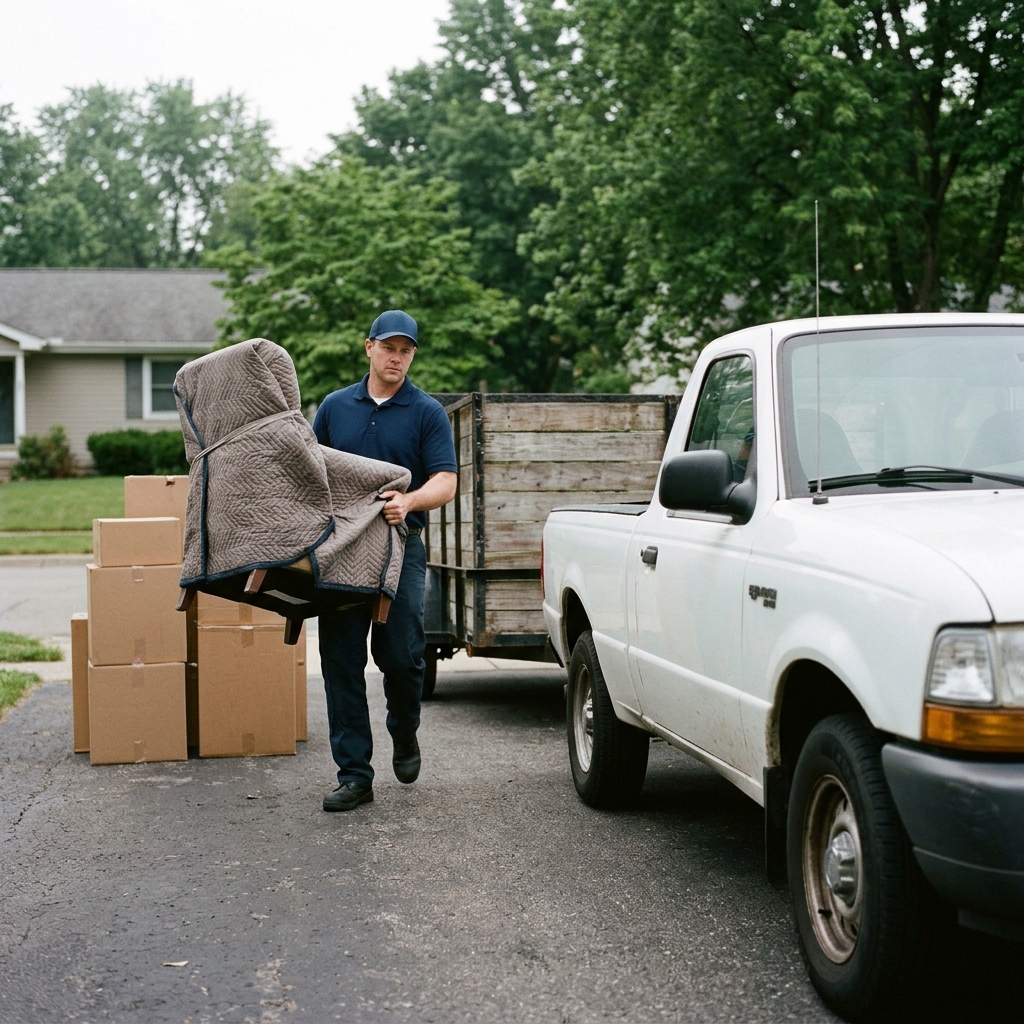
If you're reading this page, a home you care about has probably gotten past what a weekend of family effort can fix. That says nothing bad about the person living there. It's a situation, and situations can be worked through with a process. Ours is patient and private, and it runs on one rule: the person whose home it is decides what leaves it.
Lincoln Junk Removal Co. provides hoarding cleanup across Lincoln, Sun City Lincoln Hills, and western Placer County. We work without judgment because cleanouts that shame people fail.
What makes hoarding cleanup different
A standard junk job is about volume. A hoarding cleanup is about volume and trust, and that changes how we run the work.
We sort slowly. Buried in the accumulation there are usually photographs, documents, cash, jewelry, and other things that matter, so we sort as we go instead of shoveling.
The homeowner has veto power. Nothing leaves without approval, item by item in the early stages, or by category ("all newspapers can go") once trust is established.
Visits are staged. Most projects run two to five sessions across days or weeks. A clear pathway and a working kitchen make a common first goal, and a realistic one.
The crew stays the same. The same people come back each visit, because starting over with strangers every session sets the work back.
Privacy is part of the service
Nobody wants the street watching a cleanout. On request we will:
- Send an unmarked truck with no company branding
- Park in the driveway or back the truck to the garage so loading happens out of view
- Stage and sort inside the house or garage instead of on the front lawn
- Start early in the morning, before neighborhood foot traffic picks up
In a community like Sun City Lincoln Hills, homes are close and neighbors pay attention, and the person we're helping has to keep living on that street after we leave. Discretion is our standing policy on every job, and it costs nothing extra.
Working with families
Most calls come from an adult son or daughter, not from the person living in the home. Here's what we've learned across many of these projects.
Before the first visit
We start with a phone call and, if possible, a private walkthrough with the homeowner present and taking part whenever they're willing. Springing a crew on someone rarely goes well, and if the plan sounds like an ambush, we'll tell you so.
Setting the first goal
"Empty the house" is too big for a first goal. "Clear the hallway, the kitchen, and the path to the bedroom" works. Small wins show the homeowner the process is safe, and the bigger sessions go much more easily after that.
During the work
One family member acts as the decision partner, on site or by phone. Crews stay neutral and kind. They don't sigh or comment, and they take no photos beyond the documentation you ask for. Anything set aside to keep stays kept.
Working with case managers and agencies
Some projects come with outside pressure attached: a county code enforcement notice, an Adult Protective Services case, an insurance or HOA compliance letter, or a hospital discharge that can't happen until the home is safe. We work these regularly and know what the paperwork side needs:
- Written scope and quote before work begins
- Before-and-after photos of each cleared area
- Itemized invoice and donation receipts for the case file
- Work completed ahead of the compliance date, with time to spare
If a case manager or social worker is coordinating, we're glad to take direction from them and report back as each phase is finished.
What we take, and what we can't
We take accumulated household goods, furniture, clothing, papers and books, food waste and spoiled pantry contents, mattresses, appliances, electronics, and garage and yard accumulation. That covers nearly everything a hoarding cleanup turns up.
We can't take hazardous waste. By law, paint, chemicals, solvents, pesticides, propane tanks, and asbestos-containing materials can't go on our truck. Hoarding cleanups often surface dozens of old paint cans and chemical containers. We'll consolidate them safely in one spot and point you to Placer County's household hazardous waste drop-off program so they're handled legally. We recycle mattresses through California's mattress recycling program, and e-waste goes to certified recyclers. See our e-waste disposal page for how California law treats old TVs and electronics.
If there are sharps, biohazards, or animal waste, tell us in advance. We can handle some of these with proper prep. Others need a specialized remediation company first, and we'll tell you plainly when that's the case.
How pricing works
Like all our services, hoarding cleanup pricing is based on volume. You pay by the fraction of a truckload, plus disposal fees at the Western Placer Waste Management Authority facility on Athens Avenue, where loads are weighed and sorted. These projects run multiple truckloads over multiple days, so we quote them as a project:
- Most Lincoln hoarding cleanups run $1,000-$5,000
- A single packed room or garage is at the low end
- A full home cleared over three to five sessions is at the high end
- Heavy paper and books weigh more than they look, and the facility charges disposal by weight, so we'll flag it in the quote up front
The walkthrough and written quote are free. You pay the number you approve unless you add scope, and if you do, we re-quote in writing first.
After the clearing
When the contents are out, we finish each area broom-clean: floors swept, surfaces cleared, bagged trash gone. We are not a sanitation company. If the home needs carpet removal, odor treatment, or deep cleaning, we'll tell you during the walkthrough so the right help is lined up for the day after we finish.
Many families pair a hoarding cleanup with a broader transition, such as a move to assisted living or getting the home ready to sell. In that case our estate cleanout process picks up where the hoarding work ends, with the same crew and one continuous plan.
What a typical project timeline looks like
Every situation is different, but a composite of our Lincoln projects runs like this.
Week one is the walkthrough. It's a private visit, often with only the family member who called. We look at volume, access, and safety, talk through goals, and leave a written quote. We don't bring a crew or a truck, and nobody is pushed to commit.
Week two is session one, about half a day. The goal is almost always pathways: the hallway, the kitchen, and the route to the bedroom and bathroom. Obvious trash and spoiled food go first because they're the easiest yes. The homeowner sees that letting go of a bag of expired cans cost them nothing that mattered, and that the crew kept its word about the keep pile.
Weeks three to five are the main sessions, with one or two rooms per visit. Sorting speeds up as trust builds, and item-by-item decisions turn into "all the magazines can go." Donation loads leave as they fill, and receipts come back.
The final session finishes the job. We clear the last rooms and the garage, do the broom-clean sweep, and deliver before-and-after photos to whoever the family designated.
Some projects compress into a single week when a deadline forces it, such as a code compliance date, a home sale, or a hospital discharge. We prefer the patient version, but we've run the fast one plenty of times, and we'll tell you which one your situation needs.
Two rules our crews never break
First, nothing leaves without a yes, including a single newspaper or a broken chair. Loading something the homeowner hadn't released is the fastest way to lose their trust, and projects end when trust is lost.
Second, crews keep their opinions to themselves, in the house, in the truck, and after the job. The person we're working for is doing something hard, and our job is to make it easier.
Serving Lincoln and western Placer County
We take hoarding cleanup calls from Lincoln, Lincoln Hills, Twelve Bridges, Sheridan, Rocklin, Roseville, Loomis, Penryn, Newcastle, Auburn, and Granite Bay. Wherever the home is, the first step is a private conversation.
Call us or send the form, and tell us as much or as little as you're comfortable with. We've heard it all, and we've never once thought less of the family on the other end of the phone.